


It almost always starts the same way.
We stand with our clients in the room that will one day become their dressing room. Often it’s still empty; sometimes it’s already half-furnished; sometimes it’s a former guest room or a walk-through space. We look around and talk about closet heights, storage space, and clothing. It’s all very concrete, very tangible.
And then, at some point, this sentence comes up—usually in passing, almost apologetically:
“Actually, it would be nice if you could sit down here for a moment.”
This moment is exciting. Because it shows pretty much exactly what a walk-in closet is really all about. It’s not about having as many closets as possible. It’s not about perfect organization on paper. It’s about what happens in there every day.
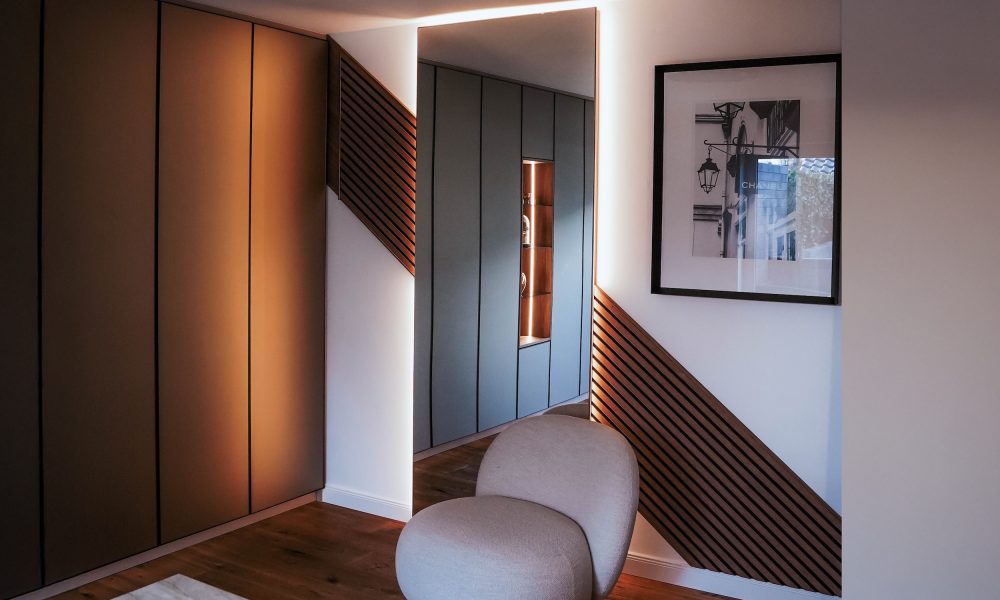
Moving is not a static process
Many people mentally plan their walk-in closet as if it were a shelf. Clothes in, clothes out. Done.
In reality, getting dressed is something completely different. It’s movement. It’s change. It’s a process that rarely follows a linear path. You try something on, take it off again, and reach for something else. You change your shoes. Accessories are added or removed.
And somewhere in between, the desire for a fixed point arises—a place where you can find a moment of peace.
If this element is missing, you don’t notice it right away. But you can sense it. Things end up on the bed, on chairs, or on the floor. You hurriedly put on your shoes while standing. The room feels functional—but not comfortable.
That doesn’t mean the space is poorly designed. It just means it wasn’t thought through completely.
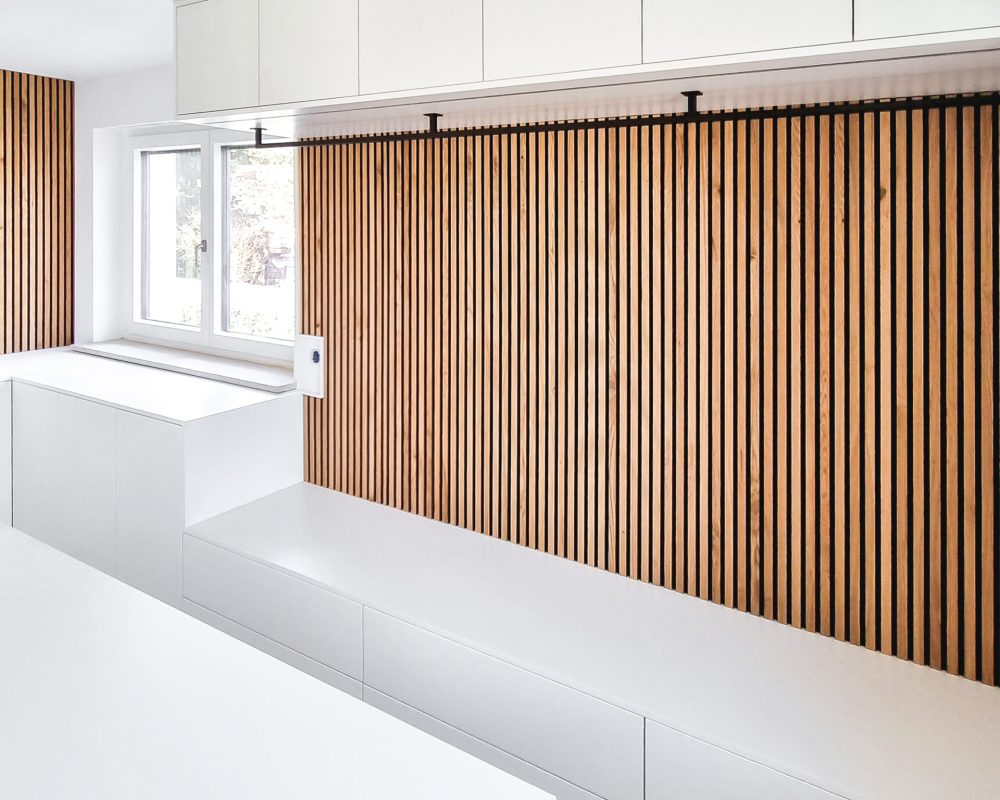
Why Order Alone Isn't Enough
Many of our customers come to us with a clear goal: to get organized. Finally, a walk-in closet where everything has its place. Finally, no more chaos in the bedroom.
That makes perfect sense. And yes, a well-designed custom cabinet can do exactly that.
But order is only half the story.
A room can be perfectly organized and still feel unsettling. That happens when it doesn’t support the people who use it. When it offers storage space but no comfort. When it looks tidy but constantly requires small detours in everyday life.
This is exactly where the seating area comes into play.
The seating area as a quiet focal point
A seating area doesn’t drastically change a walk-in closet. It doesn’t impose itself. It isn’t an eye-catcher in the traditional sense. And that’s exactly what makes it so effective.
It creates a fixed point in space—a place where one pauses briefly, where movements slow down, and where processes suddenly make sense.
Many people underestimate this effect—until they experience it.
After the renovation, we often hear comments like:
“We use the sitting area every day.”
Or: “This is now the place where everything comes together.”
That’s no coincidence. It’s a good understanding of space.
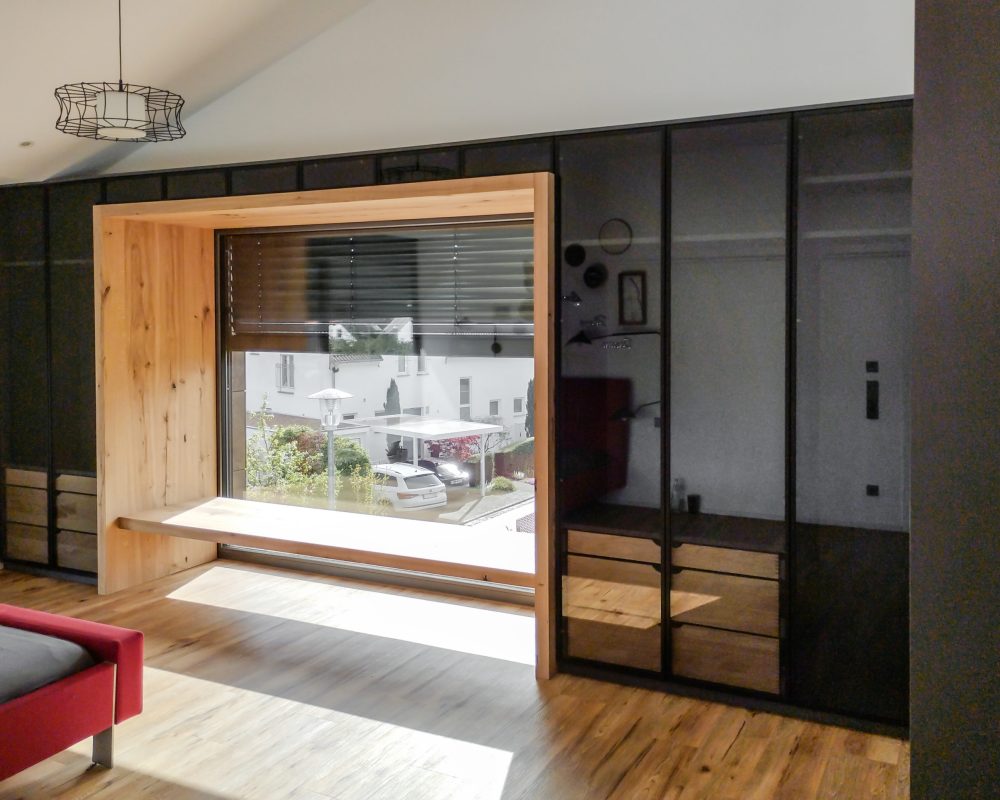
Why a seating area needs to be planned—not added later
A common thought is: “Once everything is set up, we’ll just add another bench.”
That sounds pragmatic. But it rarely works out very well.
Loose pieces of furniture in the walk-in closet have a problem: they don’t belong there. They’re there—but they aren’t integrated. They block pathways, don’t fit in visually, or offer no additional benefit beyond the seating itself.
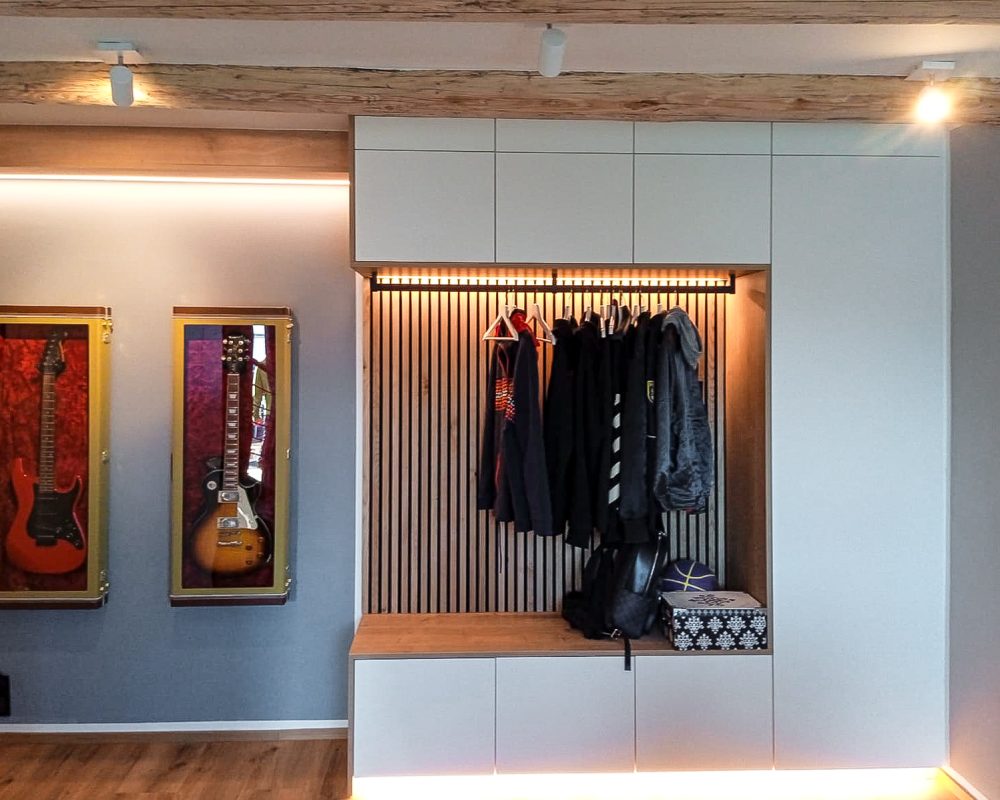
A custom-made seating area, on the other hand, is part of the solution. It’s designed to fit the space. It makes use of areas that would otherwise remain unused. And it creates storage space exactly where it’s needed.
Shoes, bags, and other everyday items disappear beneath the seat. Nothing looks improvised. Nothing is left to chance.
You can tell right away: This was designed with that in mind.
How Seating Areas Perform in Practice
In smaller walk-in closets, we often incorporate seating areas between two sections of closets. You sit down, reach for your shoes, and stand back up—all in one fluid motion. No detours, no turning around, no searching.
In larger rooms, the seating area often serves as a unifying element. It creates structure and divides the space without breaking it up. As a result, the dressing room feels less like a utilitarian space and more like an integral part of the living area.
What we see time and again is that the seating area quickly becomes more than just a place to put on your shoes. It becomes a spot to set things down, a stopover, and sometimes even a place to retreat for a brief moment.
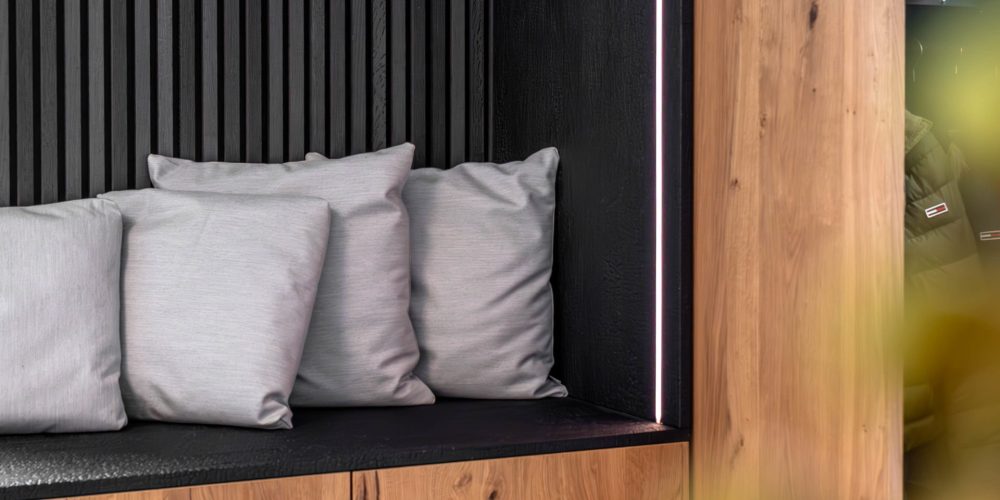
Storage space where it makes sense
One detail that is often overlooked is the storage space under the seat. Yet it is precisely this feature that determines whether the seating area works well in everyday life.
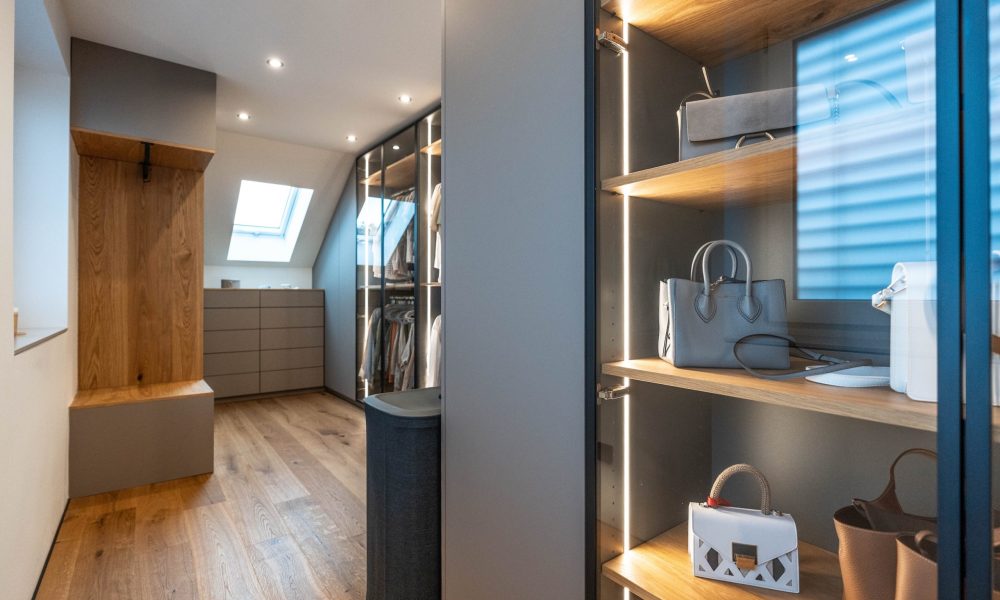
When you’re sitting down, you want to have things within easy reach. Shoes, bags, accessories—everything you need when getting changed should be right there within reach.
That’s why we plan these areas very thoughtfully. Not according to a one-size-fits-all approach, but based on how they’ll be used. Open shelves for items that need to be put away quickly. Pull-out drawers for everything that’s used regularly. Closed cabinet fronts where a sense of calm in the room is important.
It’s not about fitting in as much as possible. It’s about fitting in the right things.
Mirrors, Light, and Proportions
A seating area only comes into its own when it interacts with the rest of the room.
A mirror placed in the right spot helps you get your bearings while sitting. Shoes, pant lengths, proportions—you can check all of these much more easily this way.
At the same time, lighting plays a major role. Especially in the seating area, soft, warm lighting ensures that the room doesn’t feel cold or sterile. Indirect lighting, subtle accents, and well-placed spotlights—all of these elements help make the room feel inviting without looking staged.
Materials That Can Withstand Everyday Use
A walk-in closet isn’t a showroom. It’s used. Every day.
That’s why, when it comes to seating areas, we pay special attention to materials that can stand up to the test of time. Surfaces that are durable. Upholstery that remains easy to care for. Colors that still look harmonious even after years of use. A seating area shouldn’t feel like a foreign element, but rather like a natural part of the room—something that’s simply there without demanding attention.
For whom a seating area makes the biggest difference
Our experience shows that people who use their dressing room extensively benefit particularly from a seating area—couples who share the space, people with lots of shoes or accessories, and anyone who appreciates a moment of quiet in the morning and evening.
It’s not about size or luxury. It’s about everyday comfort. It’s about making daily routines easier. It’s about spaces that support you rather than challenge you.
Planning Begins with Listening
A seating area only works well if it’s planned from the very beginning—if you understand how the space is used, what paths people take, and where things are stored.
That’s exactly why our planning process always begins with conversations. We don’t just look at measurements; we look at habits. At what’s causing problems today. And at what we want to improve in the future.
After all, a walk-in closet is great when you don’t have to think about it anymore.
Here's how the Cabinetheroes create a walk-in closet
It all starts with a no-obligation online inquiry. After that, a Cabinethero partner or the headquarters in Nuremberg will contact you personally. We’ll stop by, take a look at the space, and listen to your needs.
There are no standard offerings, no online configurator. Every solution emerges from our conversation. From the space itself. From the daily lives of the people who will use it. And that’s often exactly where the seating area takes shape—not as a wish list, but as a logical outcome.

Conclusion: A small space with a big impact
A walk-in closet without a seating area can work.
With a seating area, it just feels right.
It’s often the quiet details that make the biggest difference. A place to sit is definitely one of them.
Not because it’s beautiful.
But because it makes everyday life easier.
And that’s exactly what a custom solution is all about.

